AI and Education
August 13, 2026 | 12 PM EST
AI and Education
AI is reshaping education by expanding access to personalized learning tools that adapt to each student’s pace, strengths, and needs. It can reduce administrative burdens for teachers, giving them more time to focus on mentoring, creativity, and human connection. At the same time, schools must address concerns about equity, data privacy, and over-reliance on automated systems. When used thoughtfully, AI becomes a partner that enhances—not replaces—the deeply human work of teaching and learning.
Rev. Dr. Marian Edmonds-Allen
Rev. Dr. Marian Edmonds-Allen is a public theologian, peacebuilder, and values-based strategist working at the intersection of artificial intelligence, ethics, faith, and human flourishing. She is the founder FaithWise.ai and serves as Co-Director of the AI & Spirituality Initiative within the Neurospirituality Lab at Mass General Brigham.
Marian’s work focuses on helping leaders, institutions, and communities navigate technological change with wisdom, integrity, and a deep commitment to human dignity. She develops practical frameworks and educational tools that help individuals engage AI thoughtfully while strengthening moral agency, critical thinking, and meaningful human connection.
She is also Executive Director of Parity, a nonprofit organization dedicated to promoting religious freedom, pluralism, and protecting human dignity across sectors. Her work brings together faith leaders, technologists, educators, policymakers, and civic organizations to address emerging ethical and social challenges related to AI and digital culture.
Marian speaks internationally on AI ethics, covenantal pluralism, peacebuilding, religious freedom, and values-centered approaches to technology. Her work emphasizes that AI should serve as a tool that supports but never replaces human wisdom, creativity, discernment, and relationships.
Medlir Mema
Medlir Mema is a political scientist, educator, and civic innovator working at the intersection of AI governance, public
policy, and community engagement. A steering committee member at IEEE’s Global AI System’s Flourishing
Initiative, Utah Common Ground, and Utah Multifaith AI Council, he is the director of the AI Ethics and Governance
Institute (AEGIX), serves as Executive Director of Organized Intelligence (OI), and is a Senior Fellow at Faith Matters.
Medlir's work focuses on how emerging technologies like artificial intelligence shape democratic institutions, public
trust, and societal outcomes, with an emphasis on ethical governance and human-centered policy. With a global
background spanning Europe, the United States, and Japan, and educated at The Johns Hopkins University-SAIS
and George Washington University, he brings both academic and practical experience to advancing dialogue,
leadership, and civic infrastructure that bridge divides and enable better decision-making in an age of rapid
technological change.
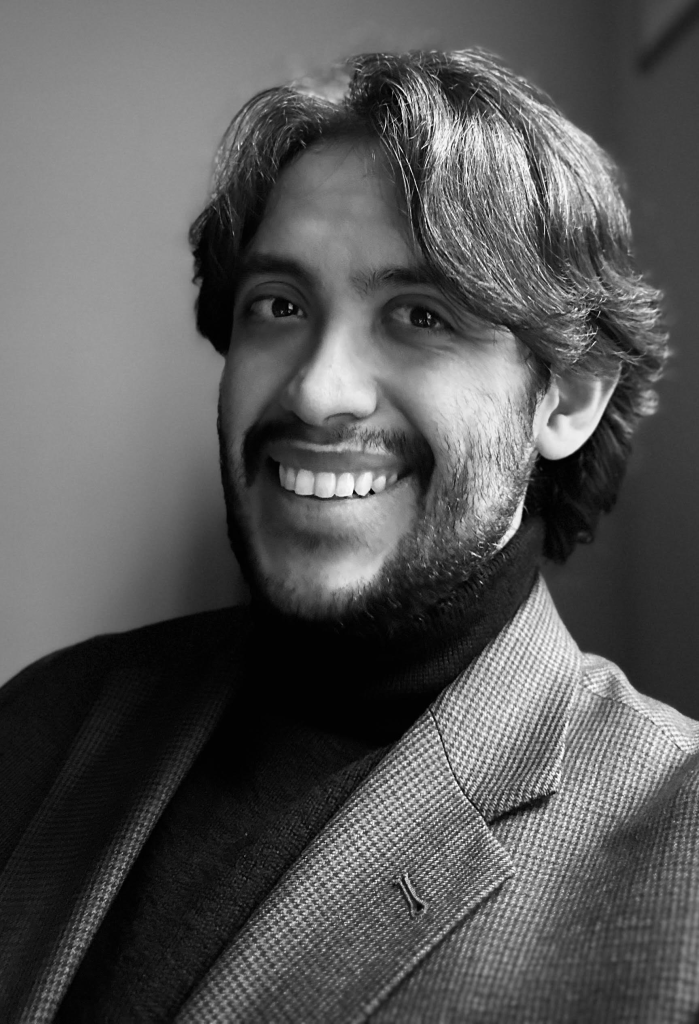
Noah Torres
Noah Torres is the Policy Director of the Family Success Project at the Texas Public Policy Foundation in Austin, Texas, where he focuses on state, federal, and international family law, child welfare, artificial intelligence regulation, child online safety, and human services & welfare reform for the sake of promoting the flourishing of all Texans and the common good of Texas. Noah's latest work has centered on ensuring that novel digital technologies promote integral development and respect the infinite and abiding dignity of all persons in all contexts, especially in the context of the family understood as the first space of education and pedagogy. Additionally, Noah previously worked on antitrust and competition law enforcement in healthcare during his tenure at the Foundation.
Prior to joining TPPF, Noah earned his B.A. in politics and theology (‘21) and M.A. in politics (‘23) at the University of Dallas. During his graduate studies, Noah worked within the Cambridge School tradition of intellectual history and authored his M.A. thesis on the relationship between law and conscience as mediated by interpretations of right and justice in 16th and 17th century Catholic and Scholastic theories of politics, law, ecclesiology, and moral probabilism. Noah remains an active participant in conversations relating to early modern Scholasticism, continuing to publish both on its intellectual history and its relevance to contemporary questions, particularly concerning the relationship between Catholic moral theology, human agency, and technology. Additionally, Noah is an advocate in the canonical courts of the Catholic Church, a role that has spurred private study on the future relationship between canon law jurisprudence and artificial intelligence.
Noah is an active member of academic organizations dedicated to Spanish and French political and legal thought and of public policy organizations dedicated to AI and religion, child protective services, and welfare reform.
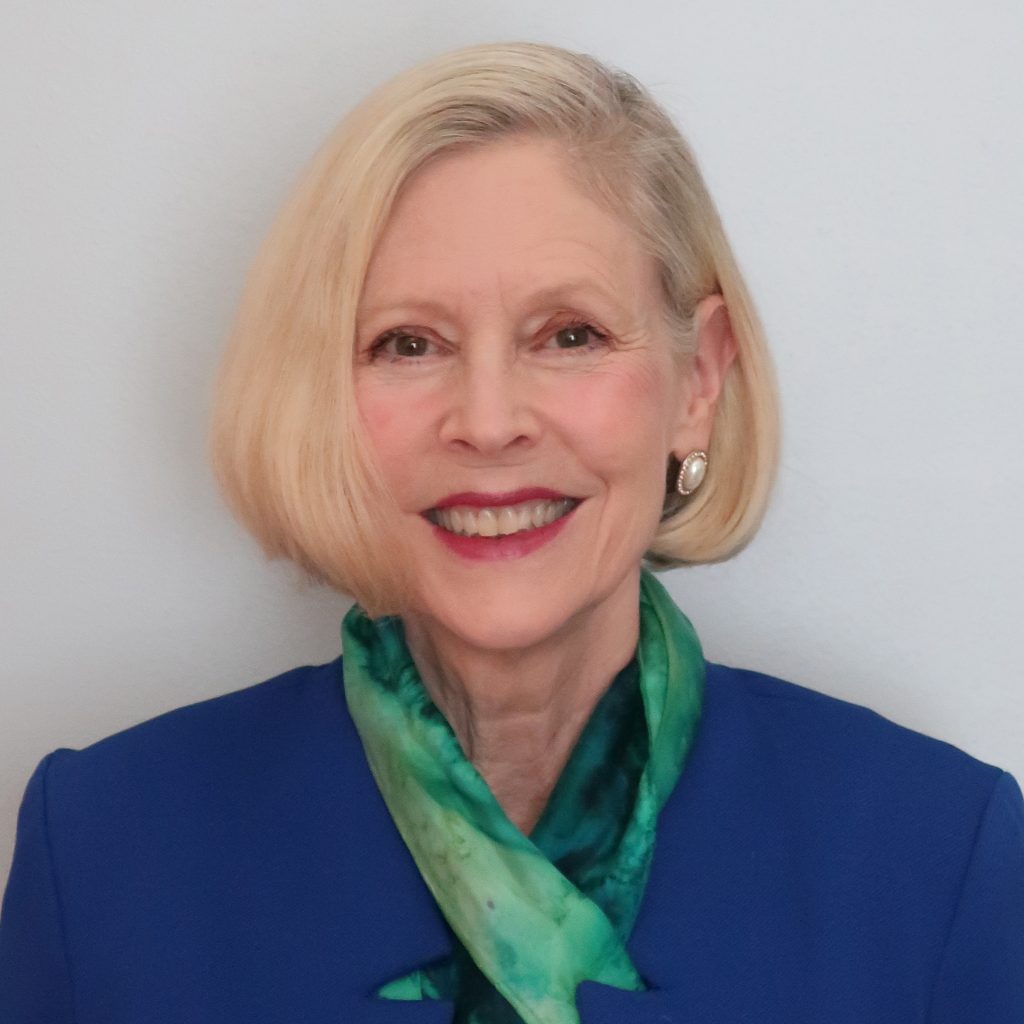
Dr Marianna Richardson
--- Moderator ---
Marianna Richardson is currently the Director of Communications for the G20 Interfaith Forum. She is also an adjunct professor at the Marriott School of Business (MSB) in management communication and the editor-in-chief of the Marriott Student Review, a student-run, peer-reviewed journal. She is also the faculty advisor for Measuring Success Right, a business podcast. She was recently awarded the Wendy C. Archibald Meritorious Service Award from the J. Reuben Clark Law School and the Outstanding Adjunct Teaching Award at BYU MSB. She is also on the International Advisory Council for the International Center for Law and Religious Studies. She has published books and articles on a variety of subjects. She received her master’s degree from Johns Hopkins University and her doctorate from Seattle Pacific University.